 Free Canada-Wide Shipping on Orders $300+
 Proudly Canadian
 Third-Party Lab Tested - 99% Purity Standards

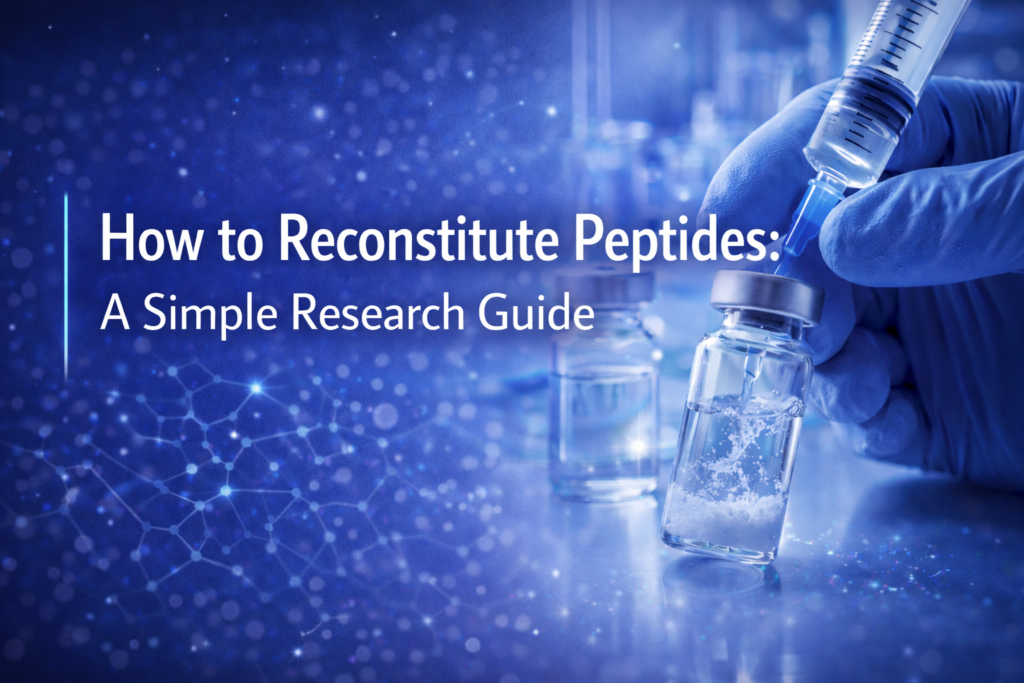
How to Reconstitute Peptides: A Simple Research Guide
Peptides used in research are commonly supplied as lyophilized (freeze-dried) powders and must be reconstituted with a sterile liquid before use. Proper reconstitution helps preserve peptide stability and supports reliable research outcomes.
For research & educational purposes only. Not for human or veterinary use.
What Does Reconstitution Mean?
Reconstitution is the process of adding a sterile liquid to a freeze-dried peptide so it becomes a usable solution. Lyophilization improves stability during storage and shipping, which is why careful rehydration matters.
What You’ll Need
Before you begin, gather everything so you’re not rushing:
- Lyophilized peptide vial
- Sterile bacteriostatic water or sterile water (as required by your protocol)
- Sterile syringe with clear volume markings
- Alcohol prep pads
- A clean, stable work surface
Working slowly and cleanly is more important than working fast.
What to Do When Reconstituting Peptides
- Let the Vial Reach Room Temperature
If the peptide has been stored cold, allow it to sit at room temperature for a few minutes before opening. This helps prevent condensation inside the vial. - Measure the Liquid Carefully
Draw the correct amount of sterile water into the syringe based on your research protocol. Double-check your volume before proceeding. - Clean the Vial Top
Wipe the rubber stopper with an alcohol pad and allow it to fully air dry before inserting a needle. - Add the Liquid Slowly
Insert the needle into the vial and slowly inject the liquid down the side of the vial, not directly onto the powder. This helps prevent foaming and protects peptide structure. - Mix Gently
After adding the liquid: Gently swirl or rotate the vial
Allow the powder to dissolve naturally
Most peptides dissolve within a few minutes, though some may take longer.
What Not to Do
Avoiding common mistakes is just as important as following the steps correctly.
- Do not shake the vial
Vigorous shaking can damage delicate peptide structures.
- Do not inject liquid forcefully
Spraying liquid directly onto the powder can cause foaming and stress the compound.
- Do not use non-sterile water
Tap water or unsterile liquids increase contamination risk.
- Do not rush the process
Give the peptide time to dissolve fully without agitation.
- Avoid repeated freeze–thaw cycles
Repeated temperature changes can accelerate peptide degradation and reduce stability.
- Do not leave reconstituted peptides at room temperature
Liquid peptides are less stable than freeze-dried ones.
Storage After Reconstitution
Once reconstituted, peptides should be handled and stored with care:
Refrigerate at 2–8 °C
May be suitable for use within 2–8 weeks, depending on peptide structure, solvent used, and storage conditions
Continue to protect from light and heat
Use within an appropriate timeframe based on your specific research protocol, and discontinue use if changes in clarity or appearance are observed
Proper storage helps maintain peptide stability and supports reliable research outcomes.
Why Proper Reconstitution Matters
Proper reconstitution and storage help maintain peptide integrity and support consistent, repeatable research results. Careful, consistent handling during reconstitution helps protect peptide quality throughout research use.